

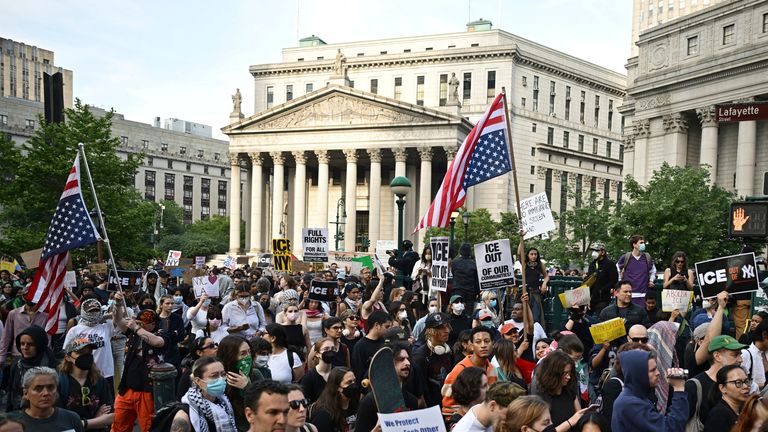
Los Angeles, June 2025 – What began as localized opposition to ICE immigration raids in early June rapidly spiraled into one of the most significant domestic confrontations of the Trump era—a flashpoint for debates over civil rights, the use of military force on American soil, and the boundaries of presidential power .
The Trigger: ICE Raids and Public Outrage
On June 6, Immigration and Customs Enforcement agents initiated raids across Los Angeles, detaining numerous undocumented individuals. Tensions erupted almost immediately. While many demonstrators remained peaceful, clashes erupted in downtown, with streams reported from protests in Paramount and Compton en.wikipedia.org.
A Heavy-Handed Response
In an extraordinary escalation, President Trump federalized the California National Guard and authorized deployment of U.S. Marines under “Task Force 51.” By June 9, around 4,100 National Guard personnel and 700 Marines were patrolling city streets—a level of military presence in Los Angeles unseen since the Civil Rights era en.wikipedia.org.
What Was Lost, What Was Charged
-
Curfews, arrests, and unrest: A citywide curfew was imposed downtown; over 575 protesters and at least 70 businesses were caught in the upheaval. Multiple injuries were reported—among both demonstrators and police. en.wikipedia.org
-
Journalistic rights under fire: Reporters covering the protests faced direct violence—rubber bullets, pepper spray, and arrests—raising alarm from press freedom advocates. At least 35 incidents involving media personnel were recorded .
-
Politicized law enforcement: Governor Newsom’s lawsuit challenged the federalization as political overreach. Critics condemned the militarized response, with many accusing the White House of using martial rhetoric and actions to inflame rather than calm the situation en.wikipedia.org.
Community Voices: From Protesters and Residents
Many Angelenos voiced fear and frustration:
-
Some locals described peaceful protests overshadowed by aggressive federal tactics.
-
Others stressed that the raids and response threatened civil liberties, describing the scenes as reminiscent of authoritarian crackdowns—far removed from democratic protest norms.
What Comes Next: A Turning Point or Temporary Flashpoint?
The LA protests reverberated nationwide:
-
Parallel rallies emerged in New York, Chicago, and Dallas, signaling deepening frustration and solidarity en.wikipedia.org.
-
Observers see this as a critical test of post-2020 America—can federal military force be wielded domestically without undermining constitutional norms?
Policy analysts warn this moment could redefine federal-state relations and public tolerance for domestic deployments of military units. The next few weeks may determine whether these events mark a durable escalation or provoke lasting reform.

